
Saad Tariq

I build machines that see, sense and move fast.

I'm a machine learning and embedded engineer in Rovaniemi, just south of the Arctic Circle, where I lead the high-speed drone project at Frostbit, Lapland University of Applied Sciences. Most of my work sits where code turns into motion: a drone that hit 287 km/h, a car that drives itself, and a little frog that keeps plants alive.

Saad Tariq in a dark suit at an event, in front of balloons and a glitter curtain

BatDrone at 287.4 km/h, from the pilot's goggles

The fastest pass of a 79-second test flight on 24 September 2026, low over forest and bog outside Rovaniemi.

287.4km/h

Peak GPS ground speed in level flight at full throttle. GPS Doppler and position-derived speed agree to within 0.1 km/h.

The propeller was the limit

At 24,100 rpm, an 8-inch pitch gives 294 km/h in theory. The drone reached 97–98% of it, so the next build moves to higher voltage for more RPM.

Checked two ways

Four passes went above 260 km/h. Around the peak, two independent GPS measurements matched within 0.1 km/h, with 16 satellites locked.

Then the battery gave out

The pack sagged on every hard pass and collapsed at 66 seconds. The drone came down in bushes 143 m from takeoff, and the log shows why.

Launch
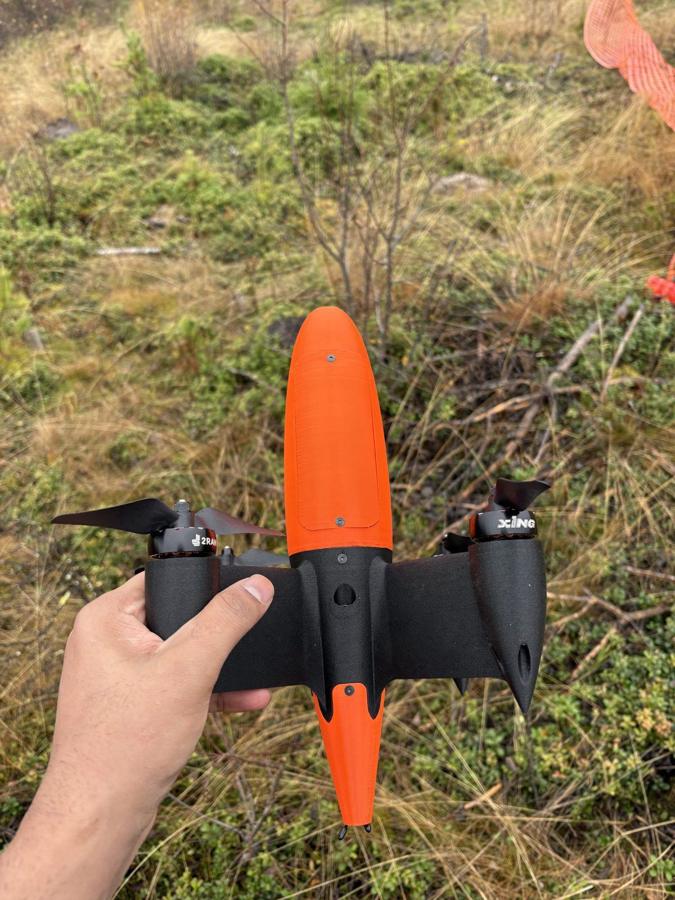
The orange streamlined BatDrone held in one hand
The airframe

Getting faster

  1. 245.526 August, about 76% throttle
  2. 287.424 September, full throttle, level
  3. NextHigher voltage and upgraded batteries
Read the flight report

Other things I've built

Hardware, models, and the data between them, mostly with real partners.

A hand-painted green Sprooty frog peeking out of a red 3D-printed plant pot

Co-founder

Sprooty

A hand-painted frog you push into a plant's soil. It measures moisture, light and warmth and tells your phone before the plant wilts. It started as a university project between FH Technikum Wien and Lapin AMK. My part is the AI and the circuit boards, which I design and solder.

  • PCB design
  • Sensors
  • Wi-Fi
  • AI assistant
Robot carThe autonomous robot car

Personal project

Autonomous robot car

Three models run on the live camera feed: TinyUNet keeps it in lane, YOLOv5 watches for objects, and a Random Forest adjusts speed for the weather. 92% average lane model accuracy.

  • Raspberry Pi
  • ESP32
  • YOLOv5
  • Flask
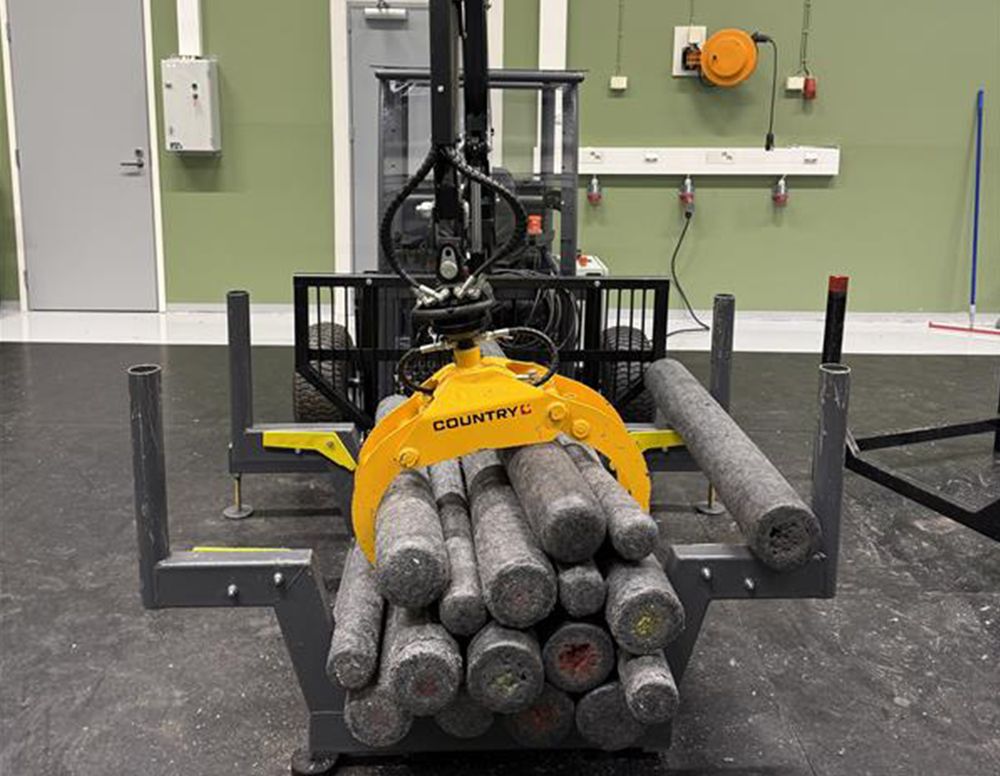
The miniature log-loading machine with its yellow grapple holding a bundle of training logs

Technical specialist and thesis worker at MetsäDigi REDU, 2026–now

Log detection for forestry training

Computer vision for a miniature log-loading machine that students practise on. It counts logs, reads their orientation and times each placement, so every practice run gets measurable feedback. I also install the hardware on site and keep it running smoothly.

  • Object detection
  • Orientation
  • Real-time video
  • On-site hardware
Rain forecastStill from the rainfall forecasting project video

Industry project with Marjetas, 2025

Forecasting Jyväskylä's rainfall

Local rainfall prediction from weather sensors at four sites. As the team's machine learning specialist, I led model development and tested around ten classical and deep learning approaches.

  • LSTM
  • Prophet
  • XGBoost
  • Ensembles
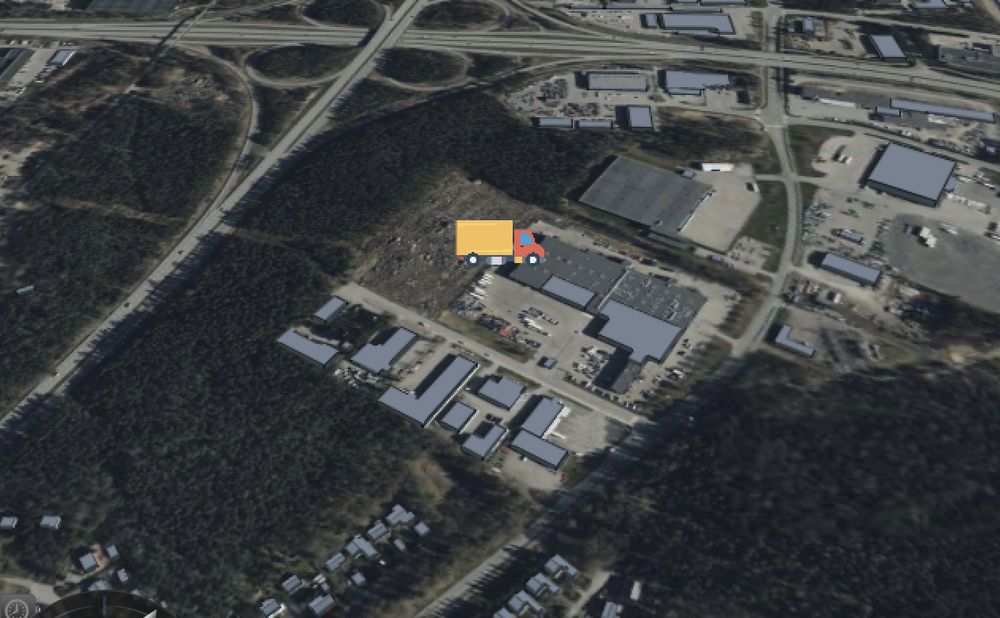
3D map view of an industrial area with a truck marker, from the road hazard dashboard

Industry project with Triona

Road hazard intelligence dashboard

An interactive map of where heavy trucks meet hazards in cities. They cluster around turning, merging and braking, where traffic is densest.

  • Data analysis
  • Maps
  • Dashboard UI

More experiments live on GitHub

Coursework models, prototypes and the code behind the projects above.

github.com/Saadtariq32

What I'm working on now

High-speed drone

Upgrading the setup and refining everything for the next speed runs.

Finishing my thesis

Log detection for MetsäDigi's training machine, due before I graduate in January 2027.

Sprooty

Circuit boards and the AI assistant, with a team split between Vienna and Rovaniemi.

A bit about me

I like problems that cross the line between code and physical things, where a model's output ends up as a motor command, and the only honest test is a flight log or a lap of the track.

I started in electronics at Metropolia in Helsinki, then moved north to Rovaniemi for machine learning and data engineering. Lapland gave me the opportunity to study my passion and experience it first-hand.

Programming and AI: Python, C/C++, SQL, machine learning, computer vision, LLMs

Hardware: drone systems, Betaflight, Raspberry Pi, ESP32, PCB design and soldering

Data and tools: Power BI, Docker, Git, Linux, flight log analysis

  • Project Lead, FrostbitJun 2026 to nowLeading the high-speed drone project: design, CFD-based shell, flight testing to 287.4 km/h, flight-data analysis and test reports. Presented the project to incoming drone specialization students.
  • Technical Specialist and Thesis Worker, MetsäDigi REDUApr 2026 to nowComputer vision for a forestry training machine, and installing the hardware on site.
  • Co-founder, SprootyOngoingCircuit boards and the AI assistant for a smart plant sensor.
  • Intern, FrostbitSep 2025 to Aug 2026Tested AI systems for autonomous vehicles, built hardware modules, assisted students and held workshops.
  • B.Eng., Machine Learning and Data Engineering2024 to Jan 2027Lapland University of Applied Sciences
  • Electronics studies2023 to 2024Metropolia UAS, then transferred to Lapland UAS

Building something that moves? Let's talk.

stsaad3153@gmail.com
Back to home

Frostbit, Lapland UAS. Flight test report.

BatDrone, a streamlined interceptor drone

A high-speed interceptor built around a 3D-printed streamlined shell, a 6S power system and a flight controller that logs every motor's RPM. Every flight is tested, logged and taken apart in the data. This page walks through the speed run of 24 September 2026.

Flight 24 Sep 2026Logged 79.4 s at ≈1 kHzGPS 10 Hz, 14–16 satellitesRange ≈590 mMax height 119 m
Launch, 24 September 2026
≈282 km/hTwo-way average, best pass each direction
24,100 rpmMotor speed at the peak, full throttle
≈2%Slip against the propeller's pitch speed
4 passesAbove 260 km/h in one flight

Every pass above 260 km/h

Vertical speed comes from GPS altitude, RPM is the average of the four motors, and pitch speed is what an 8-inch pitch would give at that RPM.

PassTimeGPS speedHeadingClimbThrottleRPMPitch speedPack
A24.9 s277.7 km/h87° E+7.6 m/s97%23,700289 km/h20.3 V
B33.1 s264.7 km/h293° WNW+8.8 m/s87%22,200271 km/h21.0 V
C57.7 s272.5 km/h282° W−1.4 m/s97%23,500287 km/h20.4 V
D61.0 s287.4 km/h289° WNW−1.0 m/s100%24,100294 km/h20.2 V

Is 287.4 real?

Over the 1.4 seconds around the peak, the mean GPS Doppler speed was 286.5 km/h and the speed from successive GPS positions was 286.4 km/h, with 16 satellites locked.

The drone was descending at about 1 m/s at 80 m/s ground speed, a descent angle under 1°, so gravity added a km/h or two at most.

Wind and direction

The best eastbound pass was climbing at 7–8 m/s, which costs speed, while the best westbound pass was level. Averaging the two gives about 282 km/h, so the true still-air level speed sits between 282 and 287.

For a record-style figure, the next run flies back-to-back level passes both ways at the same height and throttle.

What's inside

Airframe
Streamlined 3D-printed shell
Shell design
Drag studied in AirShaper
Power
6S battery
Motors
2806.5, 1400KV, 14 poles
Propellers
5.5 × 8 inch
Flight controller
SEQURE H7V2, Betaflight 4.5
Control loop
4 kHz PID
Telemetry
Bidirectional DShot, per-motor RPM
Video
DJI goggles, 1080p50 with OSD
Logging
Blackbox ≈1 kHz, GPS 10 Hz
The orange streamlined BatDrone held in one hand, showing its two motor pods and propellers
BatDrone, before the speed run
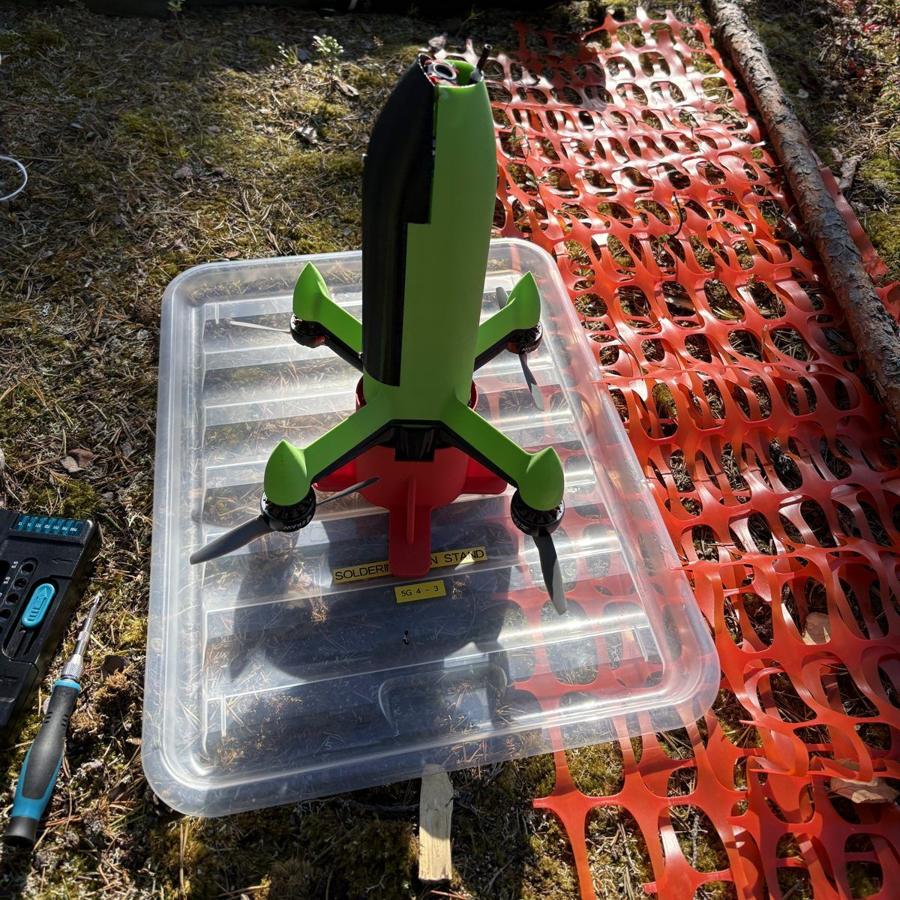
An earlier green airframe standing upright on its launch box in the field
An earlier airframe on its launch box
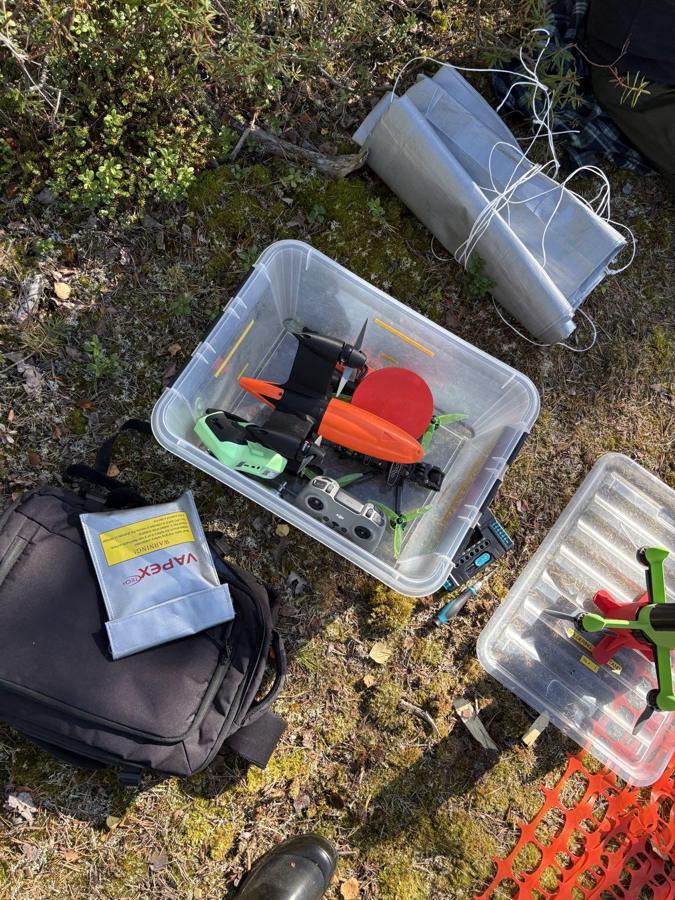
Field kit laid out on the ground: a storage box with shell parts, a battery safety bag and tools
Field kit on test day

What the flight log showed

The propeller sets the ceiling, not the drag

At 24,100 rpm an 8-inch pitch gives 294 km/h in theory, and the drone reached 97–98% of it. Smoothing the shell won't add much on 6S. More RPM will, which is why the next build moves to higher voltage and upgraded batteries.

Two independent measurements agree

Around the peak, GPS Doppler speed and speed derived from logged positions matched within 0.1 km/h, with 16 satellites and a descent angle under 1°. The number holds up.

The battery was the weak link

The pack sagged to 3.35 V per cell on every hard pass, then collapsed at 66 seconds. The drone lost authority and came down in bushes 143 m from takeoff.

The maths behind it

24,100 rpm ÷ 60 × 0.2032 m = 81.6 m/s = 294 km/h

The propeller runs at an advance ratio of about 1.42, almost equal to its pitch-to-diameter ratio of 1.45 (8 ÷ 5.5), so it makes very little thrust at top speed. The motors reached about 85% of KV × sagged voltage.

Why the next build goes to higher voltage

On 6S, top speed is set by RPM × pitch, so a smoother shell won't add much. More RPM will. With higher voltage and upgraded batteries the limit shifts to drag, and that's where the AirShaper study of the shell decides the outcome.

Getting faster

  1. 26 August 2026
    245.5 km/h

    First GPS-logged flight, at about 76% throttle.

  2. 24 September 2026
    287.4 km/h

    Full throttle, level pass. Four passes above 260 km/h.

Battery collapse, second by second

  1. 0 s

    Armed at 24.8 V (4.13 V per cell). The pack wasn't fully charged.

  2. 20 s

    From here on, every hard pass sags the pack to about 20 V, so the low-battery warning stays on as background noise.

  3. 61 s

    Peak speed, 287.4 km/h at 20.2 V.

  4. 66–69 s

    Full-throttle punch. Voltage falls from 18.9 V to 12 V in about two seconds, and RPM falls with it.

  5. 72–79 s

    The pack reaches 8.4 V. One motor pins at minimum while the others run near maximum, and the drone can't hold altitude.

  6. 79.4 s

    Comes down into bushes at about 48 km/h, 143 m from home.

Motor 1 works harder

Share of full-throttle time each motor spent pinned at maximum output.

Motor 1 sat at maximum 55% of the time, the others 23–32%. Its RPM is slightly higher than the rest, which points to centre of gravity or trim rather than a failing motor.

A sensor that read ten times low

The logged current showed about 8 A at full throttle and only 152 mAh for a flight that drained the pack, so this flight's power figures can't be used.

Once it's calibrated, the watts needed to hold top speed give the drag area directly, to compare with the AirShaper simulation and refine the next prediction from measured numbers.

What changes

Fly to a timer

About 45–50 seconds or a fixed number of passes, instead of trusting voltage warnings that sit near the line all flight.

Calibrate the current sensor

It read about ten times low. Real power at 287 km/h gives the drag area to compare with AirShaper.

Better packs, fully charged

Lower internal resistance and 4.2 V per cell before any record attempt.

Balance motor 1

It sat at maximum output twice as often as the others. Check the centre of gravity and swap props.

How the numbers were checked: the Betaflight blackbox log was decoded with a custom parser, then cross-checked against 10 Hz GPS and the goggle video, aligned to within half a second.

Back to home